


Compensation is one of the largest investments any organization makes. In enterprise environments, even small changes to salary structures or bonus allocations can have multimillion-dollar consequences. Yet many companies still manage compensation through fragmented systems, disconnected approvals, or outdated spreadsheets.
That approach does not scale.
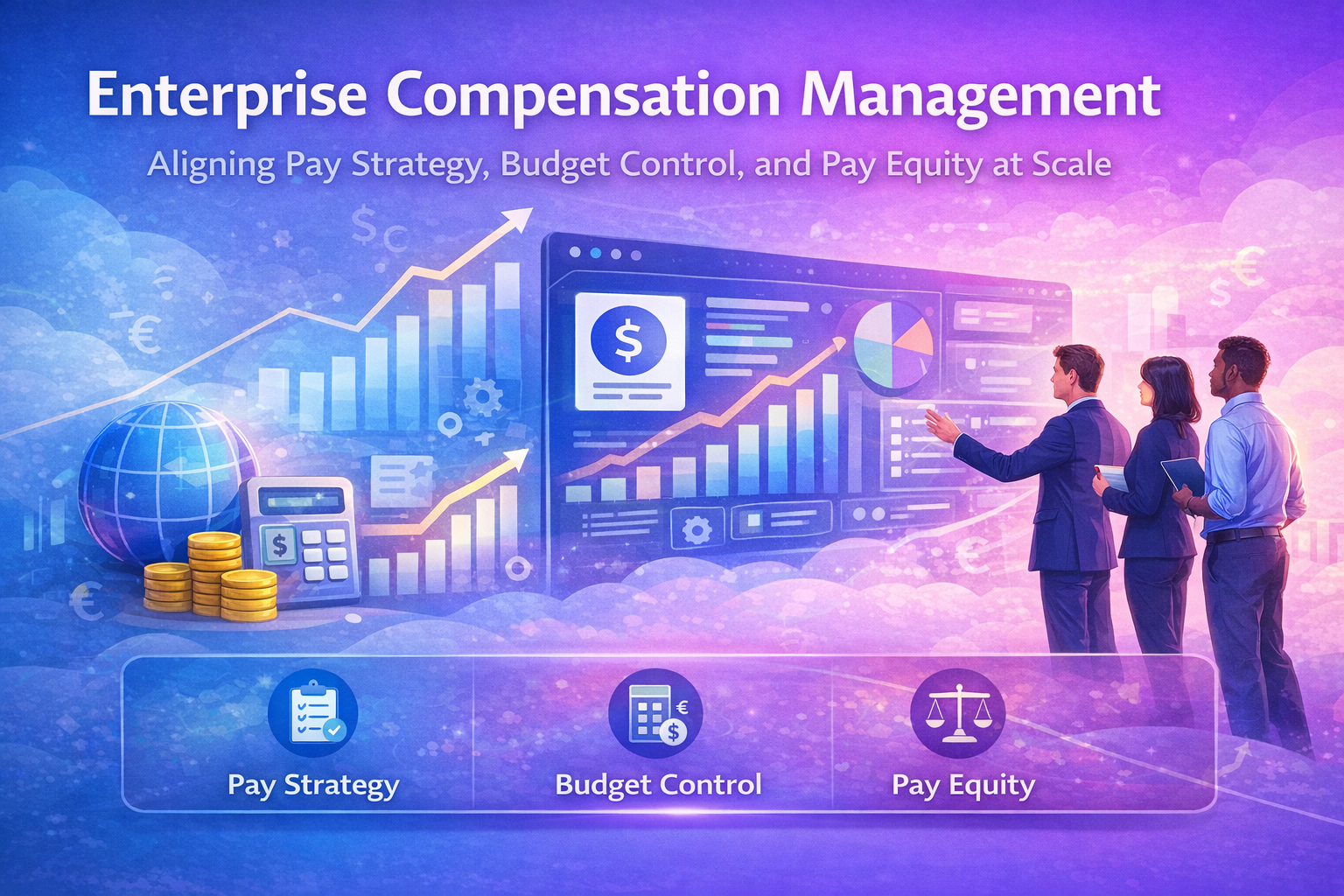
Enterprise compensation management is the structured, technology-enabled framework that governs how pay decisions are designed, approved, monitored, and optimized across large organizations. It connects HR, finance, and executive leadership into a unified compensation strategy that balances fairness with financial control.
In today’s regulatory and talent-driven environment, enterprise compensation management is no longer optional — it is foundational.
What Enterprise Compensation Management Actually Means
Enterprise compensation management goes beyond payroll processing. Payroll ensures people are paid correctly. Compensation management determines how and why they are paid.
At the enterprise level, this includes:
- Job architecture design
- Salary band creation and enforcement
- Merit increase governance
- Bonus and incentive distribution
- Budget forecasting and control
- Pay equity monitoring
- Structured approval workflows
- Executive-level reporting
The difference between small-company pay management and enterprise compensation management is scale, complexity, and governance.
Why Enterprises Need Structured Compensation Systems
As organizations grow, compensation complexity increases in three main ways:
1. Workforce Scale
Thousands of employees across departments and regions require consistent salary placement and review processes.
2. Financial Exposure
Payroll is often the largest operating expense. Small percentage changes translate into significant financial impact.
3. Regulatory and Equity Pressure
Pay transparency laws and employee expectations demand documented, defensible pay decisions.
Without structured compensation management, enterprises risk:
- Salary compression
- Inconsistent merit increases
- Budget overruns
- Equity disputes
- Compliance exposure
- Reduced employee trust
Enterprise compensation management provides the framework to prevent these risks.
Core Components of Enterprise Compensation Management
A strong enterprise compensation framework integrates several critical components.
Job Architecture and Salary Bands
Structured job levels and defined salary ranges create internal equity and career progression clarity.
Well-designed bands include:
- Clear minimum, midpoint, and maximum values
- Defined progression logic
- Market-aligned benchmarking
Without strong job architecture, compensation becomes reactive and inconsistent.
Merit and Incentive Planning
Large organizations require standardized review cycles.
Enterprise compensation systems allow:
- Department-level budget allocation
- Controlled merit increase distribution
- Bonus pool management
- Alignment between performance and pay
Structured planning reduces bias and improves transparency.
Budget Governance and Forecasting
Finance teams must forecast payroll growth accurately.
Enterprise compensation management enables:
- Real-time budget tracking
- Payroll impact simulation
- Scenario modeling before approvals
- Long-term workforce cost planning
This transforms compensation from a reactive cost into a managed financial strategy.
Pay Equity and Compliance Monitoring
Enterprises must proactively monitor for disparities.
Modern compensation frameworks can:
- Identify compensation outliers
- Flag salary compression risks
- Monitor demographic pay patterns
- Maintain audit-ready documentation
Equity is no longer just a cultural issue — it is a compliance requirement.
Governance and Approval Structures
Structured approval hierarchies ensure accountability.
Enterprise systems typically include:
- Multi-level manager review
- HR oversight controls
- Executive reporting dashboards
- Documented decision trails
Governance reduces both operational and legal risk.
HR and Finance Alignment
One of the defining characteristics of enterprise compensation management is cross-functional collaboration.
HR focuses on:
- Talent retention
- Performance alignment
- Fairness and engagement
Finance focuses on:
- Budget control
- Margin protection
- Cost predictability
When compensation systems integrate both perspectives, organizations gain balanced decision-making.
Without alignment, compensation becomes a tension point between departments.
With alignment, it becomes a strategic advantage.
The Role of Technology
Managing enterprise compensation manually is unrealistic.
Modern compensation management systems provide:
- Centralized compensation databases
- Automated workflow routing
- Integrated HRIS connections
- Real-time reporting dashboards
- Scenario modeling capabilities
Advanced platforms may incorporate AI-driven recommendations and predictive analytics to further strengthen decision quality.
Technology does not remove leadership oversight — it enhances it.
Common Enterprise Challenges
Despite its importance, implementing enterprise compensation management is not simple.
Organizations often face:
Data Fragmentation
Compensation data scattered across systems limits visibility.
Legacy Inequities
Correcting historical pay disparities can be financially sensitive.
Manager Resistance
Structured processes may initially feel restrictive.
Global Complexity
Multi-country operations add legal and currency challenges.
Strong executive sponsorship and clear communication are essential for successful implementation.
The Future of Enterprise Compensation Management
Compensation is evolving from an annual event into a continuous governance discipline.
Future-forward enterprises are investing in:
- Real-time compensation analytics
- Predictive payroll modeling
- Continuous pay benchmarking
- Greater transparency
- Deeper HR–finance integration
As organizations become more data-driven, compensation strategy will increasingly rely on intelligent systems that combine governance with forecasting.
Final Thoughts
Enterprise compensation management is about more than organizing salary reviews. It is about building a structured framework that protects budgets, ensures fairness, and supports long-term growth.
Organizations that treat compensation as a strategic discipline gain:
- Greater payroll control
- Improved equity oversight
- Faster review cycles
- Stronger executive confidence
- Increased employee trust
At scale, compensation cannot rely on intuition alone. It requires structure, data, and governance.
Enterprises that master this framework position themselves for sustainable growth and cultural stability.


