


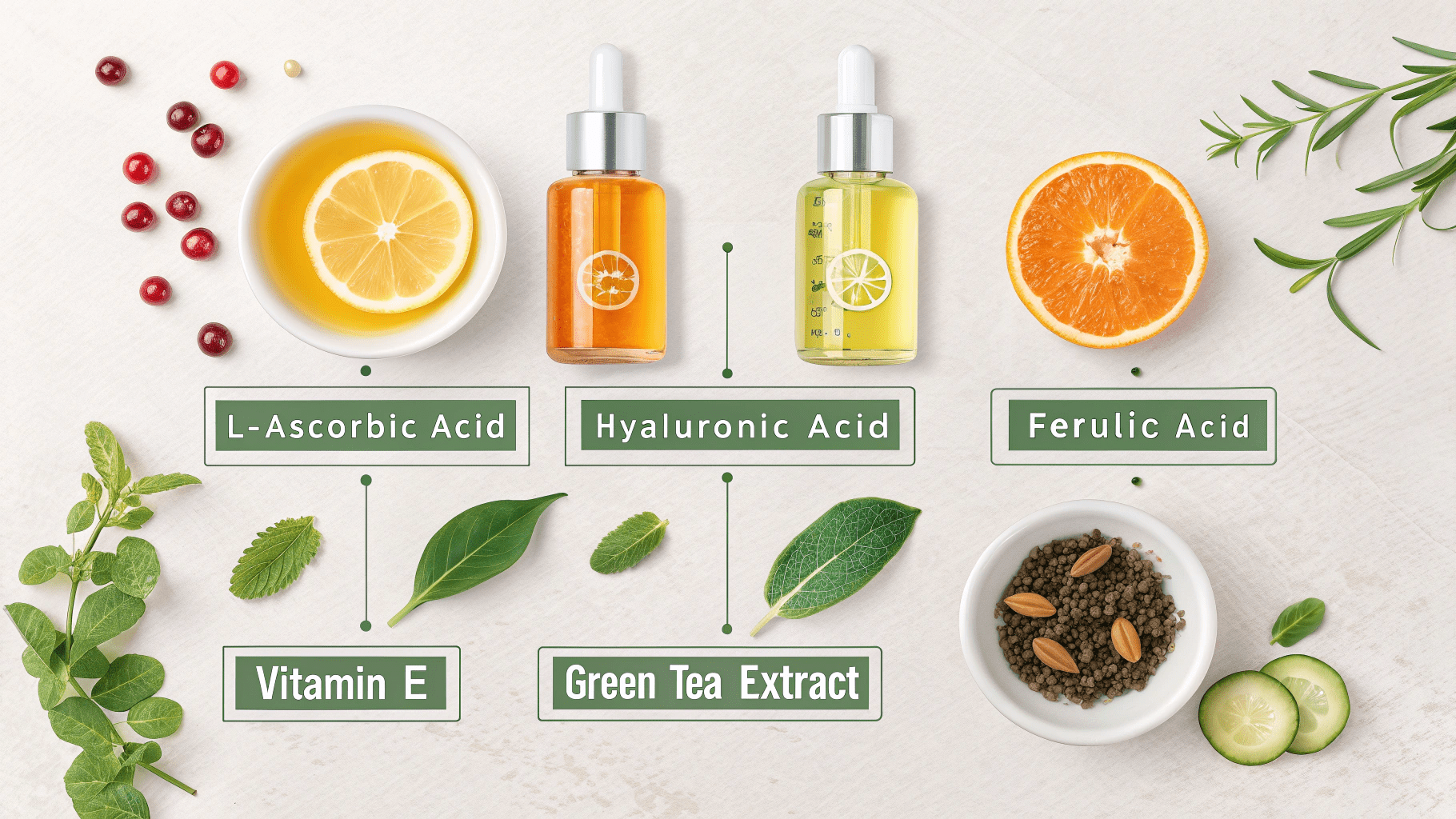
1. Stable Forms of Vitamin C (L-Ascorbic Acid or Derivatives)
The heart of any Vitamin C serum is, of course, the Vitamin C itself, but not all forms deliver equal results. L-ascorbic acid remains the gold standard—pure, potent, and mimicking the Vitamin C found in nature. At 10-20% concentration, it penetrates deeply to stimulate collagen, fade pigmentation, and neutralize free radicals. Its low pH (around 3.5) ensures optimal efficacy, but pure L-ascorbic acid oxidizes rapidly, turning yellow and ineffective.
Enter derivatives like 3-O-Ethyl Ascorbic Acid, Sodium Ascorbyl Phosphate, or Ascorbyl Glucoside. These are more stable, gentler on sensitive skin, and resistant to light and air exposure, making them ideal for beginners or humid climates. They convert to active Vitamin C on the skin, offering similar brightening without irritation. Look for serums listing these high on the ingredients—avoid vague “Vitamin C” labels that hide low potency. A quality serum balances potency with stability for long-term results, preventing waste and ensuring daily protection against UV-induced damage.
2. Vitamin E (Tocopherol)
Vitamin E is the ultimate sidekick to Vitamin C, forming a dynamic duo that boosts antioxidant power exponentially. This fat-soluble vitamin stabilizes L-ascorbic acid, doubling its photoprotective effects and extending shelf life. Together, they recycle each other: Vitamin C regenerates Vitamin E, creating a robust shield against oxidative stress from pollution, blue light, and sun exposure.
In serums, 1-2% Vitamin E soothes inflammation, repairs the skin barrier, and enhances hydration, reducing transepidermal water loss. It’s particularly beneficial for dry or mature skin, plumping fine lines while Vitamin C firms. Studies show this combo cuts sunburn cell formation by up to 50%, making it non-negotiable for anti-aging. Skip serums without it—solo Vitamin C loses efficacy faster, diminishing your investment.
3. Ferulic Acid
Ferulic acid, a plant-derived phenolic antioxidant from rice bran and oats, supercharges Vitamin C serums like no other. It lowers the pH for better penetration, stabilizes L-ascorbic acid against degradation, and multiplies Vitamin C’s efficacy eightfold when paired with Vitamin E. This “triple threat” neutralizes a broad spectrum of free radicals, preventing collagen breakdown and DNA damage.
At 0.5-1% concentration, ferulic acid also fights hyperpigmentation by inhibiting tyrosinase and reduces redness in acne-prone skin. It’s a staple in pro-grade formulas, extending product potency even in clear packaging. For urban dwellers battling pollution, this ingredient ensures your serum performs under real-world stress, delivering brighter, even-toned skin without irritation.
4. Hyaluronic Acid
Hydration is key to unlocking Vitamin C’s full potential, and hyaluronic acid (HA) is the MVP here. This humectant holds 1,000 times its weight in water, plumping skin, minimizing fine lines, and creating a moist canvas for actives to absorb. Multiple molecular weights—low for deep penetration, high for surface dewiness—maximize efficacy.worldofasaya+2
In Vitamin C serums, HA counters potential dryness from acidic pH, soothing while boosting radiance. It enhances collagen synthesis synergy, improving texture and elasticity over time. Ideal for dehydrated or combo skin, HA-infused serums prevent flakiness, ensuring consistent use. Without it, potent Vitamin C might sting; with it, your routine feels luxurious and results faster.
5. Niacinamide (Vitamin B3)
Rounding out the top five, niacinamide elevates Vitamin C serums with its multitasking prowess. At 4-5%, this form of Vitamin B3 brightens by blocking melanin transfer, refines pores, regulates sebum, and strengthens the barrier—perfect for oily, acne-prone, or uneven skin. It complements Vitamin C’s glow without overlap, calming inflammation and accelerating healing.
Recent formulations confirm compatibility at stable pH, reducing sensitivity risks. Niacinamide also boosts ceramide production, locking in moisture and defending against environmental aggressors. For Indian skin tones prone to pigmentation, this duo fades dark spots 20-30% faster. Prioritize serums blending both for comprehensive anti-aging without layering multiple products.
Why These Ingredients Matter Together
These five aren’t random; they synergize for superior stability, absorption, and results. Vitamin C provides the punch, Vitamin E and ferulic acid fortify it, while HA and niacinamide optimize delivery and comfort. Poorly formulated serums oxidize quickly or irritate, wasting money—hence checking INCI lists for these markers.
How to Spot Quality Serums
Scan for 10-20% total Vitamin C, airtight/opaque packaging, and fragrance-free formulas. Indian favorites like Minimalist (ethyl ascorbic + niacinamide), Pilgrim (with HA), or The Ordinary (pure L-ascorbic + E/ferulic) nail this checklist. pH under 4 ensures activity; yellow tint signals expiration.
Incorporating into Your Routine
Apply mornings post-cleanser: 3-4 drops, pat in, follow with moisturizer and SPF. Evenings optional if tolerated. Patch-test; introduce slowly. Pair with gentle actives, avoiding retinol initially.
Common Pitfalls to Avoid
Steer clear of alcohol, essential oils, or high fragrances—they destabilize Vitamin C. Over 20% risks irritation without gains. DIY powders lack synergy and stability.
Verdict: Invest Wisely for Timeless Skin
Prioritizing these five ingredients—stable Vitamin C, Vitamin E, ferulic acid, hyaluronic acid, and niacinamide—transforms a basic serum into a skincare powerhouse. They deliver brighter, firmer, protected skin against 2026’s stressors like pollution and screens. Consistency yields visible changes in 4-6 weeks: faded spots, glow, resilience. Choose smart, and your complexion will thank you.


