


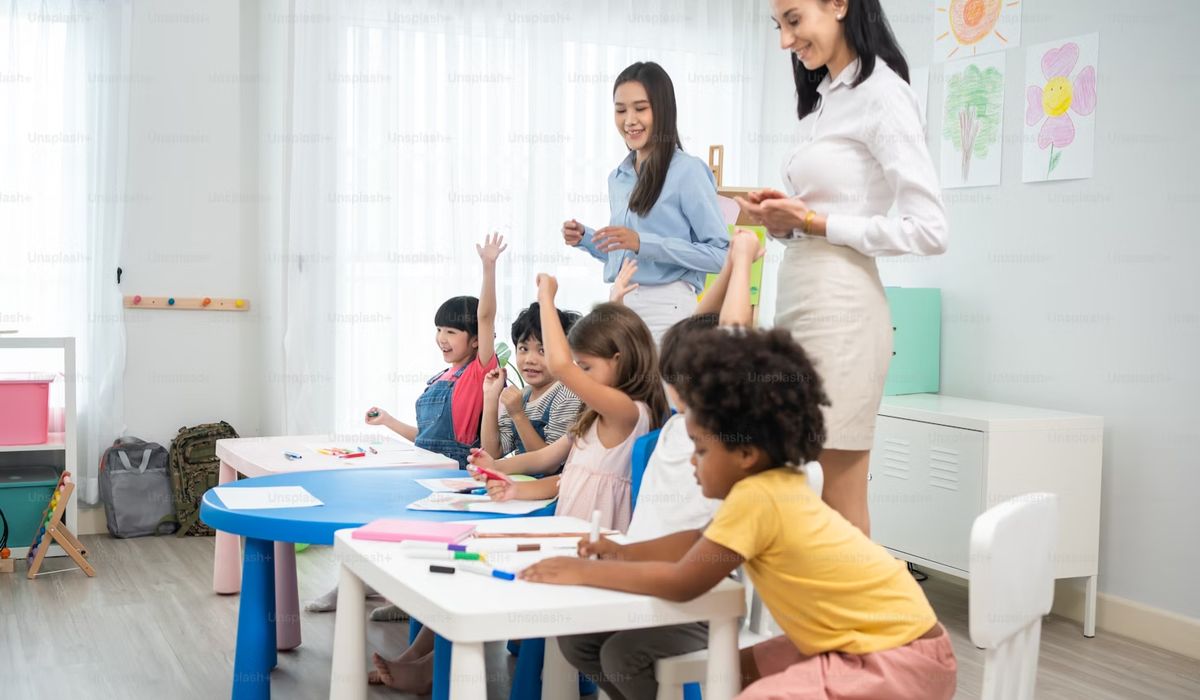
The early years are the most developmental period in a kid’s life, since the foundation laid will affect future behaviour, education, and emotional development. Many families’ first major step is choosing professional childcare to guarantee their children have suitable educational opportunities, loving guidance, and organised support. Good teachers, safe environments, and developmental programs that improve cognitive, social, and emotional well-being are among the key features of childcare facilities. These early learning environments empower kids to develop basic abilities via compassionate interactions and interesting activities that get them ready for outside the classroom.
Developing Cognitive Fundamentals Through Early Education
Early cognitive development is crucial as kids start to grasp their environment by exploration, questioning, and practical projects. Early years education offers planned chances to spark this curiosity. Activities including directed problem-solving, riddles, sensory play, and storytelling help a child grow their memory, thought, and reasoning skills. Early numeracy, attention, and linguistic comprehension are among the basic skills these sessions assist in development. Children in a nurturing learning setting are urged to experiment and learn at their own speed, therefore developing confidence as they enlarge their knowledge of new ideas. This cognitive basis becomes vital for academic success in subsequent schooling over time.
Inspiring Personal Expression and Emotional Development
The first early years concentrate on emotional growth; a good early learning environment enables kids to identify, understand, and appropriately communicate their feelings. As they interact with peers and adults who help them to control their emotions, youngsters in these situations develop self-regulation, resiliency, and empathy. Kids who are confident in themselves and understand their own needs more effectively handle daily disagreements and intentionally form close relationships by negotiating more effectively. Early childhood teachers encourage kids via positive reinforcement and behaviour appropriate to social situations to build self-confidence. Personal development depends on this emotional stability, which shapes a kid’s later life approach to friendships, academic difficulties, and stressful events.
Developing Social Skills via Organised Interaction
The main benefit early childhood education provides is social development. Early childhood or childcare environments instruct children in sharing, negotiation, teamwork, and communication. These relationships let them develop fundamental social skills otherwise difficult to learn at home. Firms advance teamwork and communication by way of group projects, circle time, and role-playing. Children’s concepts include empathy, patience, and regard for other people. Children who relate to people from all backgrounds come to appreciate diversity and a sense of belonging. Children’s readiness for future interactions and successful academic activities comes from their strong social base, which encourages them to approach others bravely.
Encouragement of appropriate behaviour and physical development
Early physical development is virtually as crucial as emotional and cognitive development. Programs for little children emphasise activities meant to improve coordination, spatial awareness, and motor skills. Physical workouts, outside games, and imaginative movement help to balance and foster muscle growth. Drawing, snipping, building blocks, or bead threading all help to develop fine motor abilities. Early learning environments also give kids basic health and hygiene education, good eating, regular physical exercise, and handwashing that they carry into maturity. Early behavioural development anchors a decent life and enhances overall well-being.
Encouragement of Originality and Imagination
Early years education provides many chances for creative expression; so, creativity is a major factor in child development. Children grow to explore new ideas and really express their own opinions through art, music, narrative, and creative play. Opportunities for them to investigate colours, sounds, textures, and events abound through the promotion of originality and problem-solving skills. Young people are driven to be more independent, inquiring, and flexible people. Though they also help to define lifetime learning patterns and future career readiness, these characteristics are especially valuable in academic contexts.
Conclusion
Early years schooling is a wise future investment for a child as well as a service. Planned learning, emotional support, social participation, physical growth, and artistic exploration all help kids build a balanced basis in all areas. Good professional early education and childcare environments promote self-assured, capable people with resilience. Loving youngsters throughout their formative years gives them the knowledge, drive, and skills necessary for physical, emotional, and mental flourishing. Early education helps individuals to be successful in life; therefore, one of the most important contributions to a child’s development is early learning.
Also, read: No More “Good Enough”: Logo Digitizing That Elevates Your Brand


