



In 2026, dental technology has advanced to the point where “dentures” are no longer the only answer for missing teeth. Instead, dental implants have become the gold standard. But the real questionis: Do you need a Single Tooth Implant to fill a gap, or is it time to consider Full Mouth Dental Implants? Understanding the technical, financial, and lifestyle differences between these two is the first step toward reclaiming your smile.
Full Mouth Dental Implants
If you are struggling with widespread decay, advanced gum disease, or a mouthful of failing teeth, a “tooth-by-tooth” approach is neither practical nor cost-effective. This is where Full Mouth Dental Implants (often referred to as All-on-4 or All-on-X) come into play.
Instead of replacing every single tooth with an individual implant, a surgeon strategically places four to six titanium posts per arch. These posts support a full, permanent bridge of teeth.
Why it’s a game-changer:
- Efficiency: You can often receive a full set of functional teeth in just a few appointments (sometimes called “Teeth in a Day”).
- Structural Support: For those who have lost significant bone density, these implants are angled to utilise the thickest part of the jaw, often removing the need for painful bone grafts.
- Lifestyle Reset: No more messy denture adhesives or worrying about teeth slipping while eating or speaking. It is a permanent, fixed solution.
Best for: Patients who are currently wearing dentures or those whose remaining natural teeth are no longer viable.

The Single Tooth Implant
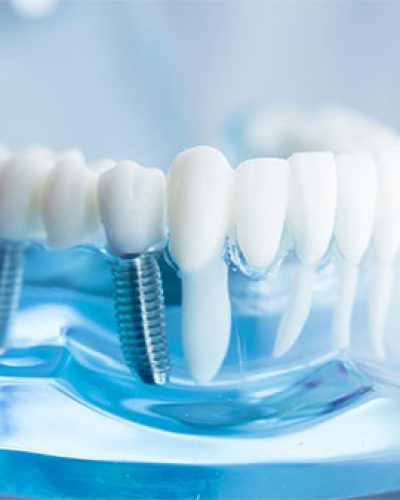
A single tooth implant is exactly what it sounds like: a standalone replacement for one missing tooth. It consists of a titanium post (the “root”), an abutment (the connector), and a custom-made porcelain crown.
Why it’s popular:
- Preservation of Adjacent Teeth: Unlike a traditional bridge, which requires grinding down the healthy teeth next to the gap, an implant stands alone.
- Bone Health: The titanium post undergoes osseointegration, where it actually fuses with your jawbone. This prevents the bone loss that typically follows tooth extraction.
- Indistinguishable Results: Modern 3D printing and digital colour-matching mean your new tooth will look and feel exactly like its neighbours.
Best for: Patients who have lost one or two teeth in different areas of the mouth but still have a majority of healthy, stable natural teeth.
Making the Choice: Key Considerations
Choosing between these two isn’t just about the number of teeth missing; it’s about the future of your oral environment.
- Gum Health: If you have active periodontal disease, a single implant may fail. You might need to address the underlying infection or consider a full-arch solution that is easier to keep clean.
- Jawbone Density: A single implant needs a specific “pocket” of bone. If your jaw has thinned out over time, the specialised angling used in full-mouth procedures might be your only viable path.
- Aesthetics: If your remaining teeth are heavily discoloured or misaligned, a single implant will only match the “old” look. Full mouth implants offer a “smile makeover,” giving you a perfectly aligned, bright set of teeth.
Whether you are fixing a single gap or overhauling your entire smile, dental implants are a life-changing technology. The best path forward always starts with a 3D CT Scan and a consultation with a qualified implant surgeon to map out your unique bone structure.